Mastodon. Truth Social. Spill. Threads.
Each of these social media platforms offers an experience that was meant to be a shift in the status quo previously set by Twitter, now called X. Whereas Spill, Truth Social, and Threads offer a traditional, centralized experience- as in user data is controlled by a single company via its servers, Mastodon offers a decentralized experience: which gives users more power over their data.
But during a time when there are a plethora of social media apps, Bluesky is the app that’s seen a surge in users. Just recently, the platform crossed the mark for 20 million. Some of these users are part of an exodus of X who find the experience unsatisfactory for various reasons, including toxicity as singer Jelly Roll cited as his reasoning for leaving the platform. Like Mastodon, Bluesky offers a decentralized experienced; however, COO Rose Wang describes it as an amalgam of what Twitter was and Reddit.
“Bluesky is more like a democratic republic in the way that it works in terms of governance where it’s like you don’t have to petition one government to do something,” said Wang. “You can go and set up local institutions, local laws. We have a second chance, and I think starting over, users have learned, ‘Hey we don’t want to repeat the same mistakes that we did in the first wave of social media.’”

Wang compares the platform’s terms of service as a sort of supreme court that is the foundation for guiding user behavior. In terms of policing decorum on Bluesky, the company has moderators on its end to assist with that, but a lot of it happens through users, including early adopters of social media platform who Wang refers as “Bluesky Elders.”
“We very much rely on users in our community to educate new users,” said Wang. We’ve given tools to users to self-govern the network themselves. You can label posts and accounts as ‘rude’ for example. And so, rudeness doesn’t necessarily go against terms of service and community guidelines. Those people are allowed to continue that behavior.”
Freedom of speech doesn’t equate to freedom from consequence, and so Bluesky’s users can make their own decisions about how to address an account they find problematic. That could mean completely avoiding an account labeled as rude or removing an original post used in a quote post that could be deemed toxic; a sort of scarlet letter placed on their profile.
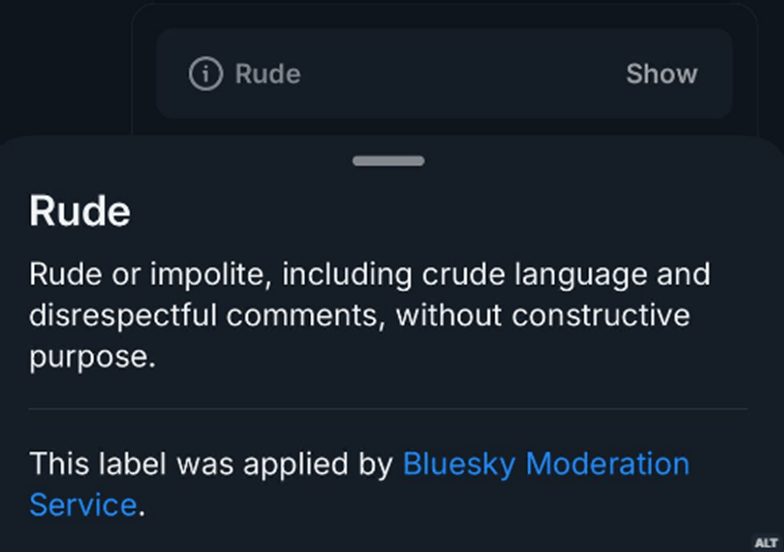
If an account is labeled in an unappealing way, this could be a deterrent for unsavory but allowed behavior on the platform. Users can also create block lists that allow other users to subscribe to and essentially mass block all the people on the list. In addition to empowering users to control what they see on their feeds, Bluesky allows them to have ownership of their data. The caveat, however, is a different approach to advertising is needed; a new way of doing it.
“It’s not a monetization model we’re pursuing now,” said Wang. “In the future there may be some form of advertising that’s similar to how it works on the web. It’s intent based.”
Giving users the ability to tie their own website domain names to their Bluesky handles was also intentional by the company. The benefit of this feature is allowing users to self-verify they are who they say they are and people on the platform can discern between legitimate sources of information versus actors of disinformation/misinformation.
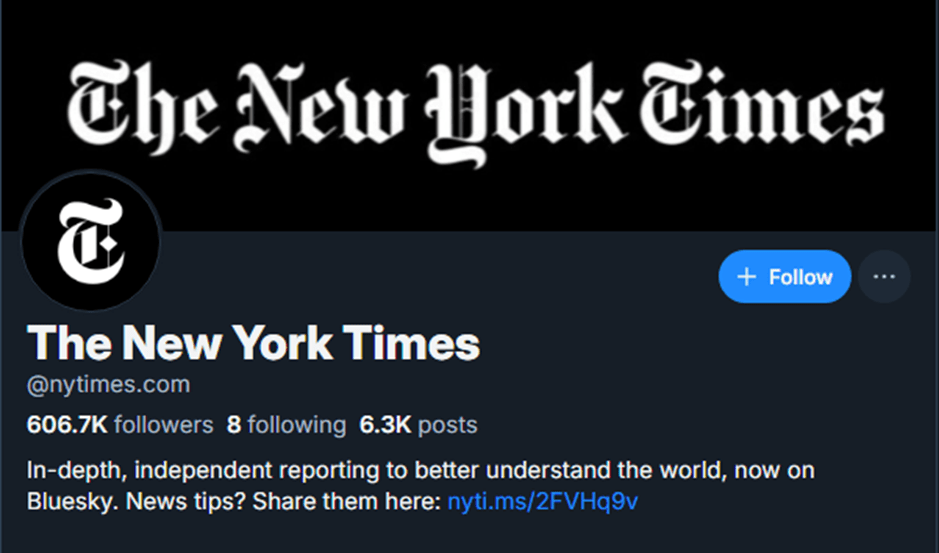
For example, the New York Times Bluesky page handle is simply @nytimes.com. Users without a domain name will have a handle that ends with “.bsky.social.” One potential downside could be a user who loses the rights to their domain name; however, that’s on the users’ end of responsibility.
Wang also addressed concerns expressed from artists who used Bluesky who worry about their content and data being used in the development of generative AI.
“What we’re hearing from users is, ‘Don’t train on my data,’ said Wang. “We’re saying, ‘We’re not. We have no reason to train on your data.’ That said, the data is public and is much like Reddit, and so it’s out there and others can train on it but we won’t.”
As a built-in contingency for people experiencing the platform going in a direction in which they don’t agree, Wang says Bluesky has a “freedom of exit” outlook. Don’t like what the app becomes? You have the power to leave.
“That’s what we want to build on social,” said Wang. “You’re not trapped in a platform. You can take all your followers and all your posts with you if you think the experience we’re giving you and the service we’re giving you is subpar.”
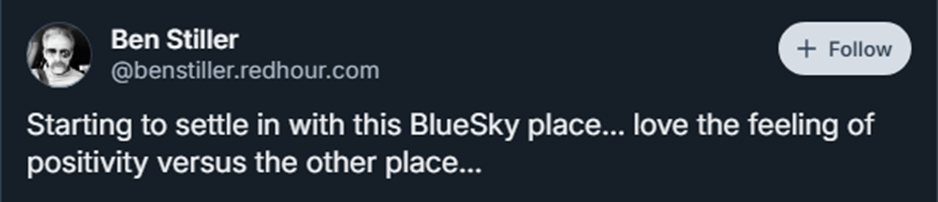
Though still a young company, Bluesky is making waves in the social media world, including from notable names such as performer Flavor Flav, actors Levar Burton, Ben Stiller, and Mark Hamill, and businessman Mark Cuban.
To keep up with demand, Bluesky has a total of 20 people engaged in doing some heavy lifting to keep the app running. The company also desires to have enough moderation in place to have around-the-clock coverage of any reports being made. The hope is to keep power in the hands of users for what the platform becomes.
“I’ve always said, Bluesky is being built for the people, by the people,” said Wang. “That’s a fundamental value to our protocol.”




 Chris Lovingood
Leave a comment